Elena Sánchez Cortina
Cultural Heritage, School of Saint Ignatius of Loyola Vizcaínas, Mexico City, Mexico
Correspondence to Elena Sánchez Cortina, Email: elena.sanchez@vizcainas.mx
Volume 2, Number 1, Article 5, December 2025.
International Journal of Documentary Heritage 2025;2(1):5. https://doi.org/10.71278/IJODH.2025.2.1.5
Received on August 01, 2025, Revised on December 08, 2025, Accepted on December 09, 2025, Published on December 30, 2025.
Copyright © 2025 Author(s).
This is an Open Access article distributed under the terms of the Creative Commons Attribution 4.0 International License (CC BY 4.0) (https://creativecommons.org/licenses/by/4.0/).

The School of Saint Ignatius of Loyola Vizcaínas was established in 1732 by a group of Basques who had journeyed to New Spain during the seventeenth century. From its inception in 1767, the institution was dedicated to the protection and education of girls and widows. Throughout its extensive history, the School has remained active, continuing its legacy as an important educational establishment.
To ensure the preservation of the school’s memory and legacy, the Historic Archive was created. This archive safeguards documents and records dating back to the School’s founding and continues to collect materials up to the present day.
This article aims to detail the development of the Historic Archive and highlight the significance of its documents. The archive encompasses a vast collection, enabling the study of a wide range of topics, including economics, education, sociology, religion, health, and everyday life. The research method employed is historical investigation, which allows for an in-depth understanding of the education provided to girls during the Viceregal period. The documents reveal that while some students chose a religious vocation and became nuns, others received an education that prepared them for marriage.
In 2008, the Historic Archive was registered under UNESCO’s Memory of the World Programme. Subsequent registrations occurred in 2010 and 2013. Few institutions in Mexico possess all three levels of registration, making this archive exceptional for its documentary value, historical significance, thematic content, and origin. The collection is a well-preserved legacy for future generations. Notably, it remains largely unexplored, offering substantial potential for research and providing an invitation to further study both national history and the institution’s development.
Historic Archive, Memory of the World, School of Saint Ignatius of Loyola Vizcaínas, School of Vizcaínas
The Historic Archive “José María Basagoiti Noriega” of the School of Saint Ignatius Loyola Vizcaínas is a treasure of documentary heritage, housed within an eighteenth-century structure located in downtown Mexico City. Established in 1732 by Basque members of the Confraternity of the Virgin of Aránzazu, the school was initially designed to provide education for orphaned girls and impoverished widows (Muriel, 1987, p. 4). Since its founding, the institution has maintained extensive records that chronicle educational practices from the eighteenth to the twenty-first century. Notably, the school is distinguished as the only institution in Mexico to have operated continuously for over 258 years while preserving historic documents and artwork.
It is among the select few institutions in Mexico to have achieved recognition at three levels within UNESCO’s Memory of the World Programme. Established in 1992, this program aims to safeguard significant documentary heritage for humanity.
Historiographical studies on the school and the archive are relatively limited. There has not yet been an in-depth examination of the full range of these documents, which presents a valuable opportunity for twenty-first-century scholars and future researchers both in Mexico and internationally to explore topics that were important in the past and remain relevant today. The materials preserved in its Historic Archive offer valuable insights into women’s education, the institution’s history, its members, daily life, and the nation’s development. The breadth of information is intended to strengthen identity, enrich knowledge, and promote appreciation of the patrimony.
After the arrival of Spaniards and other Europeans in 1521, efforts were made to establish control over the new territories and their population. Religious friars and priests engaged in converting local populations to Catholicism. The establishment of schools was part of this mission of evangelization and education. Two schools for girls contributed to the development of the School of Saint Ignatius of Loyola Vizcaínas. It is essential to refer to these two earlier institutions that played a significant role in the subsequent integration of their students into the School of Vizcaínas: the School of Saint of Our Lady of Charity and the School of Saint Michael of Bethlehem (Valero de García Lascuráin, 2014, p. 20). The first was founded in the sixteenth century, and the second in 1683. Both were religious institutions. As a result of the Reform Laws enacted in 1861, both schools ceased operations (Valero de García Lascuráin, 2014, p. 107). At the time of closure, 91 scholars and residents were relocated to the School of Vizcaínas, which remained operational and was designated to receive both the students and institutional artifacts. Consequently, the artistic works and documents from these schools are preserved within the School of Vizcaínas. This context also helps explain the origin of many documents currently preserved in the Historic Archive.
To fully appreciate the origins of the School of Saint Ignatius Loyola Vizcaínas, it is essential to understand the historical context surrounding the Basque people’s devotion to the Virgin of Aránzazu. This devotion, rooted in the mid-fifteenth century, played a foundational role in establishing the Confraternity of the Virgin of Aránzazu and influenced the values and motivations of the Basque founders (Muriel, 1987, p. 4). Their commitment to this religious tradition set the stage for the philanthropic and educational initiatives that would eventually lead to the creation of the school. The enduring reverence for the Virgin of Aránzazu united the Basque community and inspired their dedication to charitable causes, including the advancement of education for orphaned girls and widows in Mexico City (Figure 1). As their faith deepened, they established a chapel to serve as a gathering place for worship. Some members of the community migrated across the Atlantic to New Spain in pursuit of new opportunities. They subsequently held significant positions in agriculture, mining, commerce, administration, and within the church’s governance. Their industrious efforts contributed notably to the region’s economic development, establishing them as a principal driving force in the economy (Muriel, 1987, p. 3). As close connections formed between them, globalization spread among the Basques in Europe, America, and Asia.
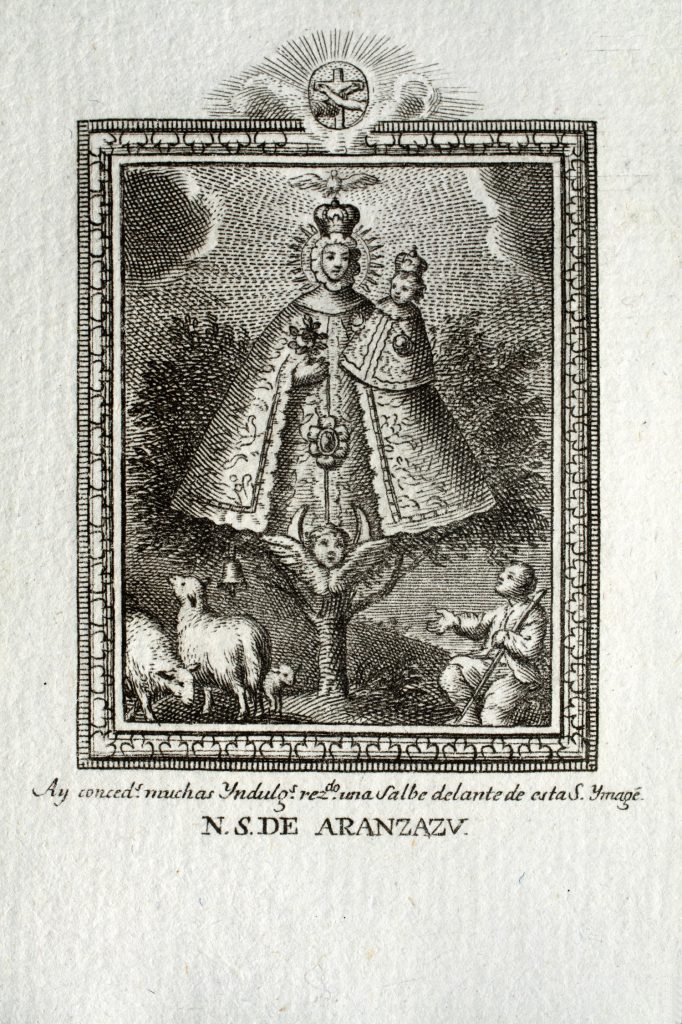
Figure 1. Virgin of Aránzazu, engraving
The Franciscan friars arrived in Mexico in 1524 and constructed a convent that included a chapel dedicated to the Virgin of Aránzazu. During this period, several convents and churches were established in the city (Figure 2). The Basque community used the chapel for meetings and supported charitable activities through the Confraternity of the Virgin of Aránzazu founded in 1681 (Muriel, 1987, p. 2). The treasurer meticulously recorded financial transactions, and these records now serve as valuable historical and economic sources.
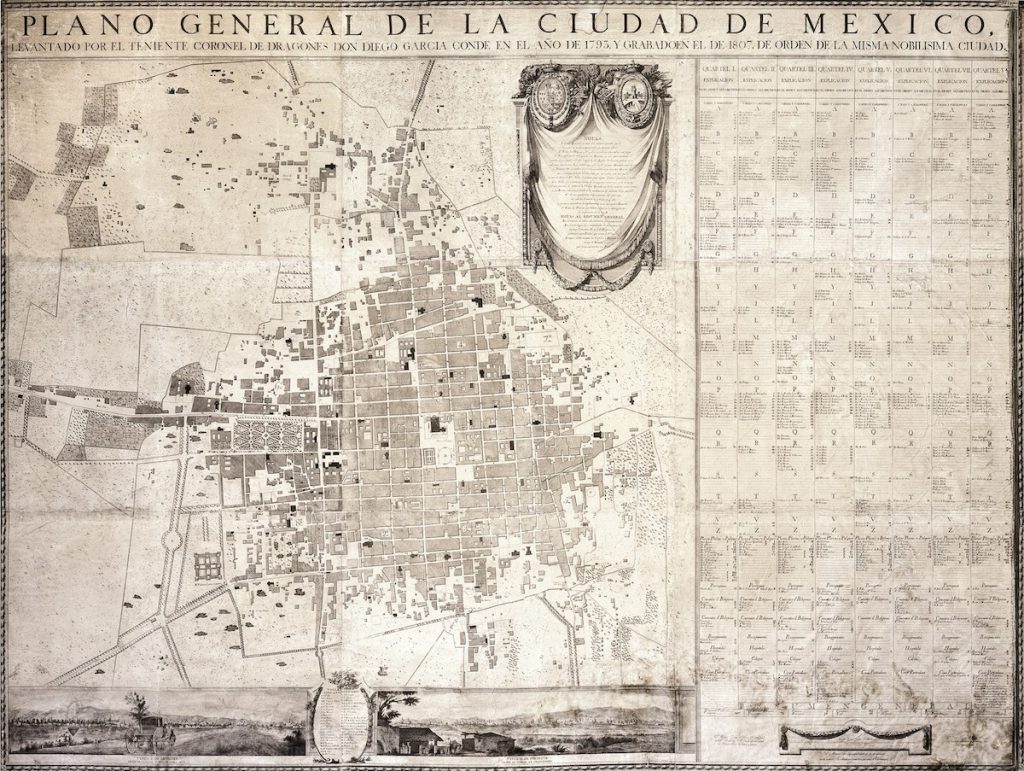
Figure 2. Map of Mexico City at the beginning of the nineteenth century
Saint Ignatius of Loyola (1491-1556) was Basque, a fact that influenced the Basque members of the Confraternity to select him as their patron saint, leading to the school’s name. He founded the Jesuit order, which has historically focused on education. In 1732, a decision was made during a meeting of the members of the Confraternity of the Virgin of Aránzazu to establish an educational institution for orphaned girls and impoverished widows (Muriel, 1987, p. 4). Members collectively demonstrated generosity, which facilitated the construction of the school. The resulting building encompassed 17,000 square meters, featuring nine courtyards and a chapel. Given that Vizcaya is a province in the Basque Country, the term “Vizcaínas” refers to women from Vizcaya, which is why the institution has since been known by this name. This initiative aimed to provide protection and education to these girls, recognizing that many would become mothers who would be responsible for imparting values and knowledge to future generations. Some students would eventually choose to pursue a religious vocation by joining the convent as nuns.
By the mid-eighteenth century, construction was completed, and Bishop Manuel Rubio y Salinas (1703–1767) sought a religious order to oversee the administration of the school. Notably, Manuel de Aldaco (1696–1770), a prominent member of the Basque community and a successful entrepreneur in the silver mining industry, played a foundational role (Muriel, 1987, p. 7). He was committed to preserving the school’s independence from both the church and government, entrusting its operation to the Confraternity members to avoid external interference (Muriel, 1987, p. 9). This was considered avant-garde during a time when the Catholic Church held significant influence (Figure 3). Furthermore, Bishop Juan Antonio Vizarrón y Eguiarreta (1682–1747), also of Basque origin, made a personal contribution and encouraged other Confraternity members to support the construction financially (Muriel, 1987, p. 14). The evidence suggests strong mutual support among these individuals, who motivated fellow members to dedicate their resources to advancing education for women and widows for the “Glory of God and the State” (Muriel, 1987, p. 14). Their instruction was grounded in Jesuit spirituality, which emphasized the significance of education.
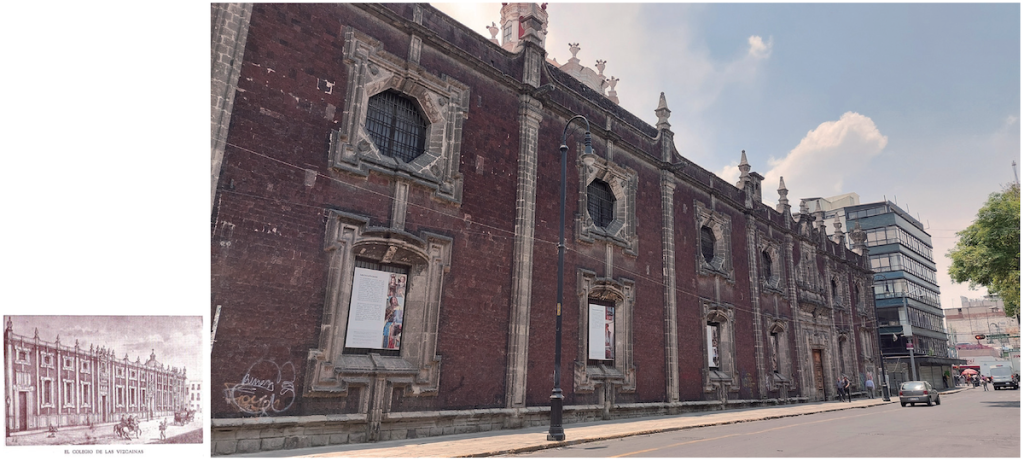
Figure 3. The façade of the school
Documents in the archive mention that the Basques hired one of the best altarpiece makers, José Joaquín de Sáyagos, and entrusted him with building in the chapel eight wooden altarpieces gilded with gold leaf, each dedicated to a specific saint ([Document E28-Tl-V5], 1774). The chapel was the center of the school where sacraments were performed, and it had to reflect the splendor and pride of the founders (Vargas Lugo, 1987, p. 178). It was within this environment that the girls received their instruction (Figure 4). Other works by Sáyagos were destroyed; this is the only chapel that still retains the original altarpieces. This subject has not yet been thoroughly studied, providing an opportunity to highlight one of the best altarpiece makers of the mid-eighteenth century.
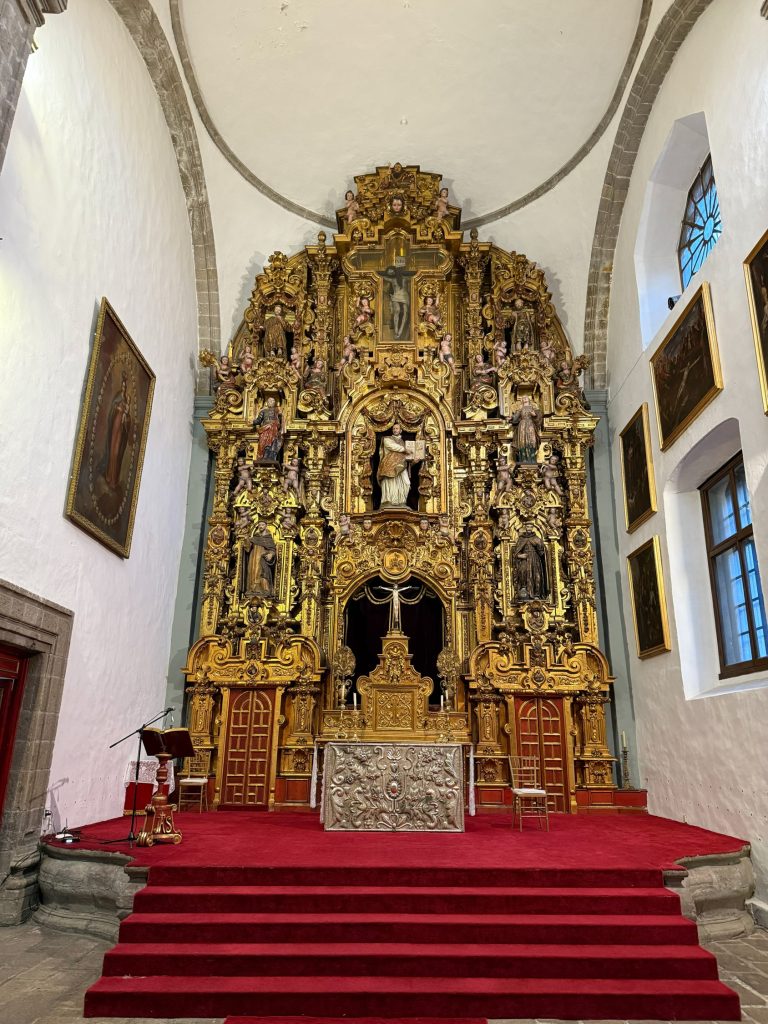
Figure 4. Altarpiece of the chapel dedicated to Saint Ignatius of Loyola
Although the building was completed by mid-century, the school could not be inaugurated until King Charles III (1716–1788) ratified the Constitutions of the School. These are 30 and have been the legal support of the institution. ([Document E5-TV-V7], 1753) Subsequently, Pope Clement XIII was petitioned to authorize its opening, and he granted the institution independence from ecclesiastical jurisdiction (Muriel, 1987, p. 35). This action is fundamental because if a religious order had been in place, the outcome would have been different. While education was grounded in Christian values and students attended Mass each morning, the school operated as a lay institution. It is noteworthy that a decision made in 1861 has resulted in the preservation of both the collections and associated documents to this day.
The School of Vizcaínas has witnessed significant events in the country’s history, including the Independence (1810), the American Army Intervention (1847), the Revolution (1910), the 1985 earthquake, and the COVID-19 pandemic. Despite these challenges, the school continues to operate with 620 students and, as of September 2025, celebrates 258 years. All these historic episodes were recorded, which constitutes the strength of the archive.
President Díaz appointed Enrique Olavarría y Ferrari (1844-1919), a Spaniard with an interest in history, as the school’s administrator (Olavarría, 1889, p. 228). Olavarría was the first to organize the documents in the Historic Archive, as well as to examine them and produce a historical review. He was also the first to mention the lack of certain documents; for instance, when he described the chapel’s decoration, he noted that some books were lost, which affected the research. In 1889, he published a book that details the efforts of the Basque founders of the school. His work incorporated information from original documents that had not been used for this purpose before. He constructed his vision of the facts. He emphasized the glorious achievements of the founders, drawing a parallel with the prosperous time when he was writing. Today, his publication serves as a reference for studies on the school’s history (Mörner, 1945, p. 165). He is recognized as the first to conduct a historiographic study of the institution. In order to study the origins of the school, it is essential to examine the documents; historians across different periods have had access to these manuscripts. A historiographical approach is necessary to offer a contemporary view of the events.
The inauguration was scheduled for September 9, aligning with the feast of the Virgin of Aránzazu (Muriel, 1987, p. 33). A manuscript in the archive describes in detail the important event of that morning, when distinguished members of society assembled to attend a Mass officiated by Archbishop Francisco de Lorenzana (Muriel 1987, p. 33). There were witnesses who described that important day. For historical research, one needs to rely on those accounts, acknowledging that some may reflect personal subjectivity. Representatives of the aristocracy and leaders of society, such as Ambrosio Meave and the Count of San Mateo de Valparaíso, coordinated the festivities, while the Count of Miravalle oversaw the musical arrangement for the service (Muriel, 1987, p. 33). This highlights the significant role of music during the Baroque period, particularly in liturgical celebrations.
Following Enrique Olavarría’s 1889 publication, Gonzalo Obregón´s book constituted the second major scholarly research on the history of the school. Due to his frequent visits to the archive while conducting research for his book, he became acquainted with Julia Mörner (1864-1958). Although he was a young lawyer and she was an elderly woman, they collaborated to recover paintings, sculptures, silverware, and manuscripts that had arrived in 1862, as previously noted. These valuable items were stored for over seventy years in the sacristy—a damp environment prone to insect infestation. When they attempted to retrieve these objects themselves, some deteriorated due to their poor condition (Obregón, 1942; Archivo Histórico del Colegio de las Vizcaínas, E25, TIII, V1). He was highly knowledgeable, particularly in history and the arts of New Spain. He dedicated considerable time to studying documents in the historical archive and authored a thesis in 1949.
A third historiographic study dates from 1987, when the archivist and historian Josefina Muriel (1918-2008) gathered a select group of historians and published a book on the history of the school. It contains different chapters that offer a more detailed view: history, architecture, artistic patrimony, and textiles. It is notable that nearly a century has elapsed since Olavarría’s initial study. Despite the material’s relevance, only three publications have emerged during this period. This limited exposure may be attributed to the subject’s relative lack of recognition.
Until this point, men have been the protagonists of this enterprise, but it is evident that women played important roles as students, teachers, archivists, and administrators. One of the purposes of the study is to underscore the role of women in society at a time when male authority was the norm. Their roles are relevant in this study; students, professors, and those with other duties dedicate their lives to the school. One approach to studying these individuals is through Gender Studies. This academic discipline provides a framework for giving voice to those engaged in diverse activities.
From the outset, María Teresa Magaña was appointed as the rector, responsible for the overall administration. Serving alongside her were a vice-rector and secretary, Teresa Lexarza, who also managed archival documentation, playing a pivotal role in establishing and maintaining the archive (Muriel, 1987, p. 33). Thus, the institution was notably led by women in key positions, a development that has garnered growing scholarly interest.
The school functioned as a boarding facility. Students’ education included literacy, arithmetic, cooking, embroidery, and needlework, with strong results—crafting ecclesiastical garments, some of which were exported to Spain. Today, 1,650 textile pieces remain in the collection, still housed at their original location (Figure 5).
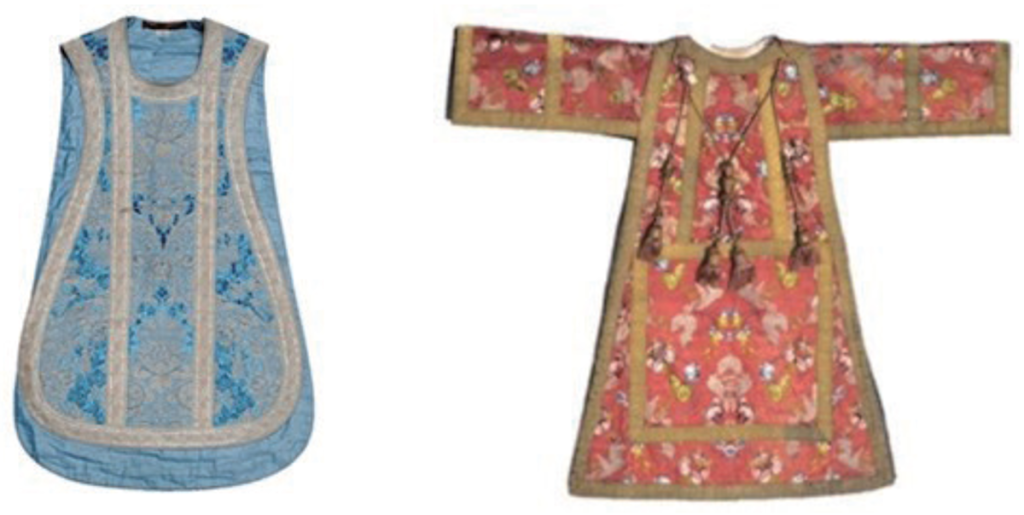
Figure 5. Liturgical garments in silk
During the Viceregal period, local government decisions in Mexico were made by the Spanish monarchy. In 1810, a social movement led to Mexico’s independence from Spain and the establishment of the nation. Another prominent woman was Josefa Ortíz (1768-1829), who, together with her husband, played a leading role in this movement. The archive holds her signed 1789 letter written while she was a student ([Document E6-T4-V11], 1789).
Several years elapsed as the nation developed its institutions and consolidated its power; in 1847, however, the American army invaded Mexico (Valero de García Lascuráin, 2014, p. 109). During this period, a contingent of American soldiers was stationed within the school, temporarily occupying part of the premises, though no damage was done to the building. This information is described in documents in the archive. Under the leadership of General Porfirio Díaz (1830-1915), who served as president for 37 years, the school was honored annually by his visits to present awards. The Historical Archive contains publications of his speeches addressed to the students, as well as a photograph documenting his presence in the corridors (Figure 6). The president of the country did not make annual visits to any other school. The girls who attended Vizcaínas received an excellent education, preparing them to marry prominent gentlemen of the era. Additionally, government officials often selected this school for their daughters.
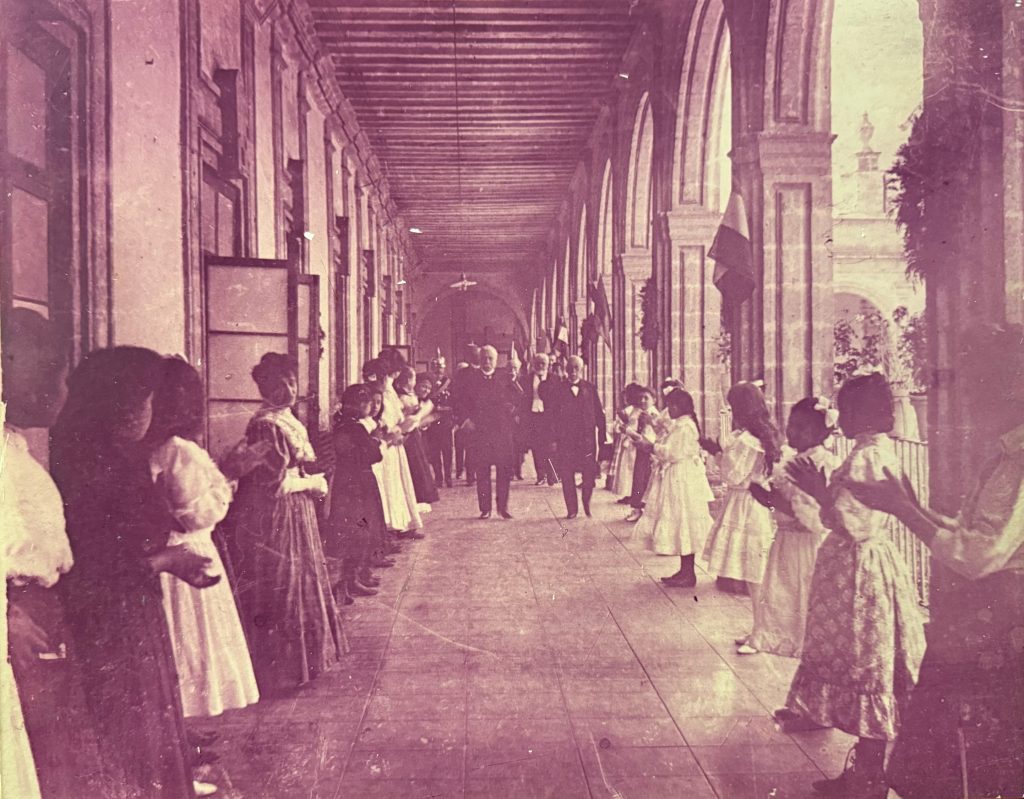
Figure 6. President Porfirio Díaz at the School of Vizcaínas circa 1900
The Historic Archive has preserved this image showing the president of the republic visiting the school. During this period, the institution benefited from economic support, with marked progress evident especially between 1871 and 1878 (Valero de García Lascuráin, 2014, p. 114). The school improved faculty recruitment, expanded instruction in science and languages, and maintained its focus on sewing and embroidery.
The participation in the International Exhibition in Philadelphia in 1876 coincided with the United States’ centennial celebration. For this event, several embroidery pieces were sent for display (Mörner, 1945, p. 90). In 1893, the city of Chicago hosted the World’s Columbian Exhibition, during which one textile—a ship embroidered with silk thread on silk cloth—was awarded a prize (Romandía de Cantú, 1987, p. 237) (Figure 7). This piece is now held in the museum collection. These textiles are available for viewing at the museum, and documentation describing them, along with additional information, can be found in the archive ([Document E4-TV-V12], n.d.). The textile collection is notable for its many handmade pieces by students. Professor Isabel Contreras and several students are identified in documents. Applying Edward P. Thompson’s social theory, the study highlights the students’ exceptional work as deserving recognition.
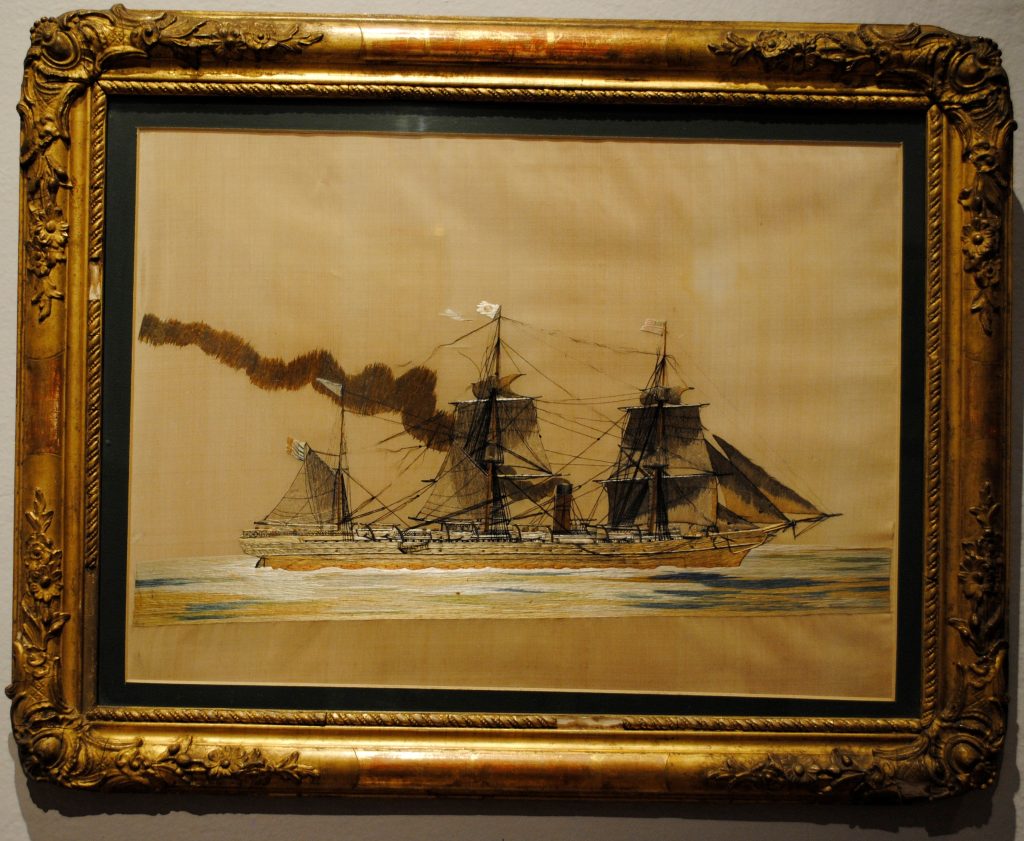
Figure 7. Ship, hand-embroidered with silk thread on silk cloth
Education at the end of the nineteenth century followed European tendencies. Science was taught, and instruments were manufactured to demonstrate scientific methods to the students. The School of Vizcaínas holds a collection of 200 instruments that were used in physics, chemistry, and other science classes ([Document E6-T4-C11], 1878). These instruments are highly valuable for their pedagogical use and are now museum objects admired for their uniqueness.
Following the contextual overview of the school, attention is drawn to a notable student. Among the many girls who attended this institution, Julia Mörner stands out for having written her memoirs in 1942 (Acta de Junta, 1942, p. 109). She enrolled in the school in 1877 with her two sisters, at a time when it was regarded as the most prestigious educational establishment. The Historical Archive includes a photograph of students participating in gym class, featuring Julia and her sister Adela (Figure 8). Gym class was established as a key part of education, alongside foreign languages, in response to government beliefs that European culture was an important source of knowledge. Julia dedicated her life to the school, serving as a student, professor, and eventually becoming its director. She passed away at the age of 93. She was the only student known to have written her memoirs, which is why her account provides unique opportunities for further study.
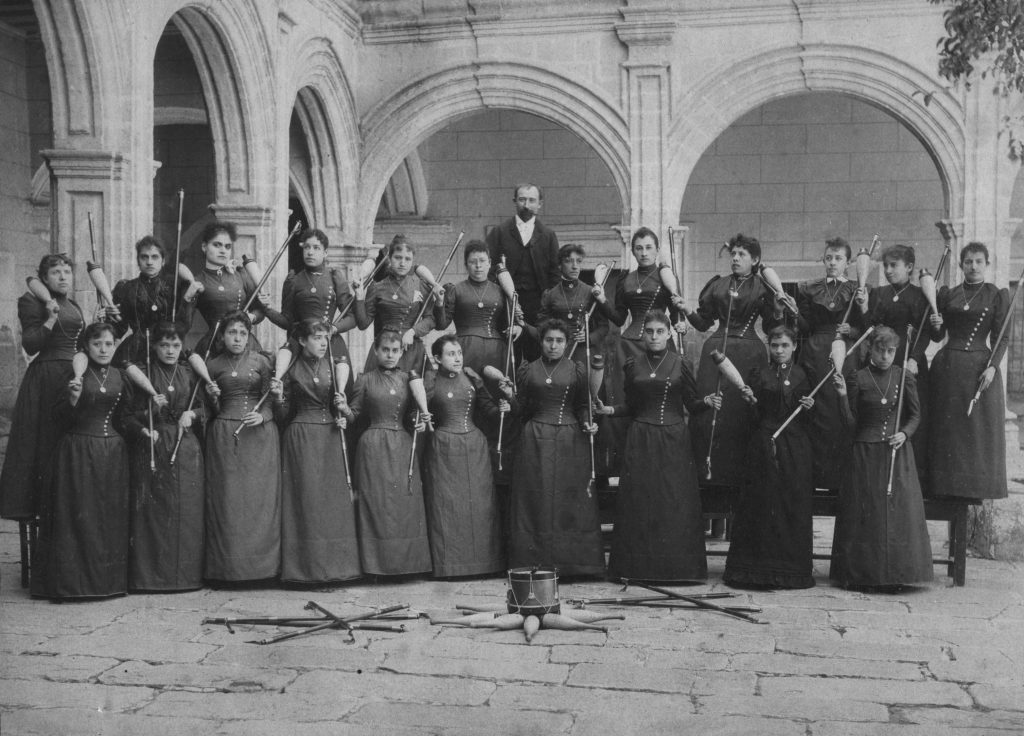
Figure 8. Gym class, 1896, Julia Mörner and her sister Adela. In the front row, Julia is fifth from the left, and Adela is eighth.
Her detailed descriptions of daily life remain a valuable resource for researchers studying the school from a particular perspective. It is important to note that she did not offer a historical perspective; her work is mostly anecdotal, but it is valuable because she recorded what she experienced. Contemporary scholarship considers the testimony an important source of information.
Mörner demonstrated a keen sensitivity and appreciation for objects, regarding them as valuable assets. In 1922, she safeguarded paintings, sculptures, and photographs, designating an empty room to serve as a museum for their exhibition (Mörner, 1945, p. 143). While her efforts contributed to the preservation of these works, it was in 1938 that she, along with lawyer Gonzalo Obregón (1917-1977), rescued additional artworks and documents (Obregón, 1949, p. 145).
Julia Mörner and Gonzalo Obregón were responsible for preserving the artistic collection and documents from the School of Our Lady of Charity, the School of Saint Michael of Belém, and the School of Vizcaínas. After assembling a significant number of notable works, they selected a spacious room previously used as a theater to serve as the museum’s exhibition space (Sánchez Cortina, 2017, p. 107). Obregón arranged the paintings—originally displayed in the churches and on the walls of these schools, serving as devotional images—for public viewing (Figure 9). Although no inventory currently exists to trace the provenance of the artworks, their preservation and continued exhibition in the school’s museum are attributable to the efforts of Mörner and Obregón. Prominent painters from the late seventeenth and eighteenth centuries are represented in this collection. These pieces offer valuable opportunities for academic study from social, artistic, and historical perspectives. Once the artworks cease to fulfill their original devotional purpose, they become museum objects and thus serve as primary sources for research (Figure 10).
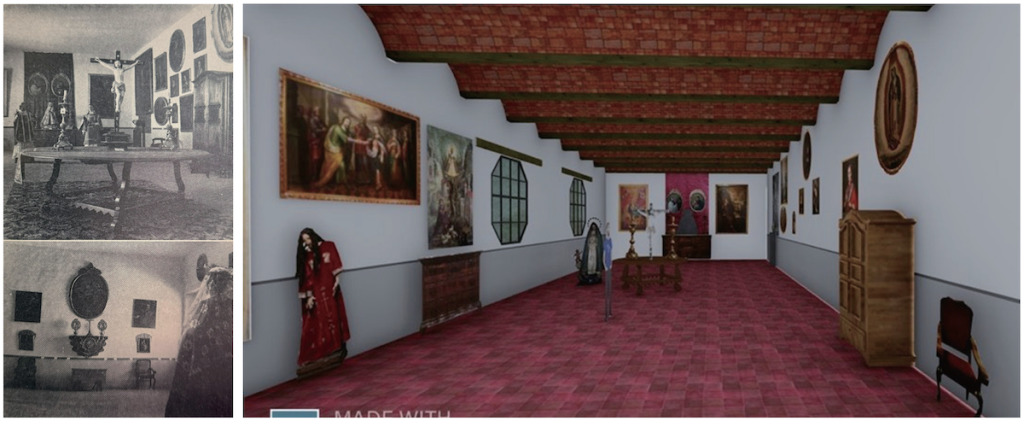
Figure 9. Museum of Vizcaínas in 1938 and a reconstruction of the museum
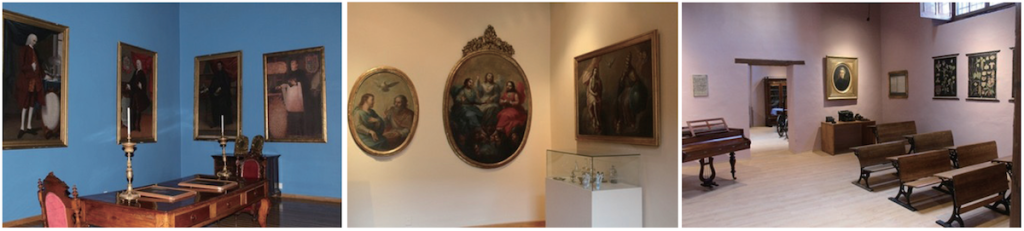
Figure 10. The Museum of Vizcaínas today
The Historic Archive is named after José María Basagoiti Noriega (1923-2009), a lawyer of Basque origin who served multiple terms as Board President, and, throughout his long tenure, he was committed to preserving documents, recognizing their central importance to the institution. In 2005, he selected a spacious area on the second floor for the archive and an adjoining room for researcher access to manuscripts, ensuring suitable research conditions. This initiative was fundamental, reflecting awareness of the necessity for proper preservation and study.
There are only a handful of historiographic studies on this subject. The earliest was conducted by Olavarría y Ferrari, followed by Gonzalo Obregón, who published works on the school, including an article about its chapel in 1943 and a thesis covering the school’s history in 1949. Significant archival organization occurred in the 1970s under Josefina Muriel, whose stewardship greatly aided in preserving the collection, with vital support from Mr. Basagoiti, a key member of the board. Beyond these institutional histories, various national and international researchers have delved into specialized topics related to the school. For example, a professor from California completed a PhD dissertation on music education at the School of Saint Michael of Bethlehem. More recently, another study examined smallpox from the seventeenth century onward, uncovering notable documents in the Vizcaínas archive detailing symptoms observed by doctors and their recommended treatments.
Documents serve as records of the history of an institution, and their preservation aims to maintain information about the actions and individuals of that period in history. Since the establishment of the Historic Archive, these papers have been retained, and it now consists of eight documentary collections, which are organized in a topographical manner (shelf, board, and volume):
1 Royal School of Saint Ignatius of Loyola
2 School of Our Lady of Charity
3 School of Saint Michael of Belém
4 Archconfraternity of the Holy Sacrament and Charity
5 Confraternity of Our Lady of Aránzazu
6 Congregation of Holy Savior of the World
7 Basque Royal Society
8 School of José María Rico
In addition to these eight collections, the archive contains a significant collection of photographs and music manuscripts. These materials, which will be summarized briefly, are particularly noteworthy for illustrating the critical role of music in educational contexts. It is important to highlight the significance of the photographic collection, which is as significant as the documents. As mentioned, the president of Mexico is seen walking in the corridors of the school. Other significant photographs were taken when the former King of Spain, Juan Carlos I, and Queen Sofía visited the school in 1997. When reflecting on Thompson, it is important to acknowledge not only distinguished individuals such as the president and monarchs, but also students, who are integral to the vitality of the institution. Numerous photographs document a variety of ceremonies and activities that align with the institution’s mission.
Reading certain historical documents can present significant challenges; consequently, paleographers receive specialized training to interpret handwriting and assist others in accessing these texts. Due to the vast quantity of such documents, seminary members dedicate an entire course to their study. This initiative ensures that these resources become accessible to a broader audience.
The depth of the archival materials is demonstrated through numerous examples. Among them, the painting of Saint Francis Xavier—an oil on canvas by renowned artist Juan Patricio Morlete Ruiz (1713–1772)—is displayed in one of the museum’s galleries. The archive holds the original documentation verifying its completion in 1768, the recorded price of 14 pesos, and the artist’s signature ([Document E28-T5-V1], 1768). For art historians researching Morlete Ruiz, this document serves as an essential source to confirm authorship (Figure 11).
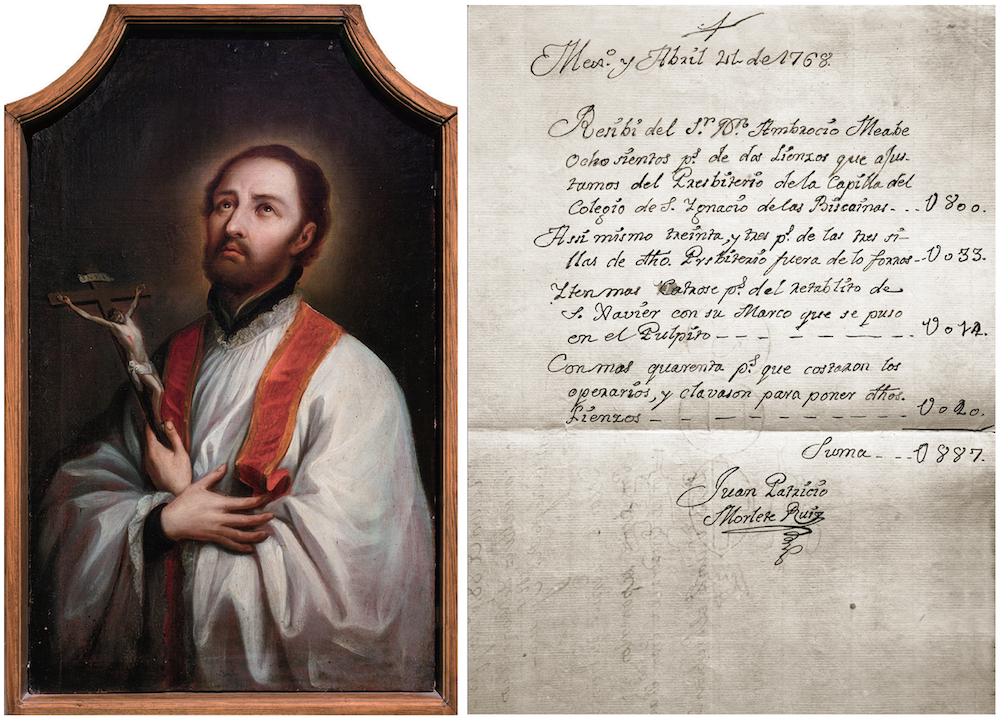
Figure 11. Saint Francis Xavier, oil on canvas, and the receipt signed by the painter Morlete Ruiz
An archival photograph shows the main altarpiece’s transformation from Baroque to Neoclassical style, a change that matched trends at the end of the nineteenth century (Mörner, 1945, p. 64). It was designed by Francisco de Paula Mendoza, the school’s painting professor. The origins of this piece trace back to 1881, when the school had an esteemed reputation ([Document E1-T3-V16], 1881). Despite proposals to remove the remaining altarpieces, they have survived, making this chapel one of the few in Mexico City to retain all five of its original eighteenth-century altarpieces. Julia Mörner, who witnessed these changes, noted her displeasure at the transformation (Mörner, 1945, p. 64) yet appreciated that, despite significant risk, the altarpieces were not dismantled.
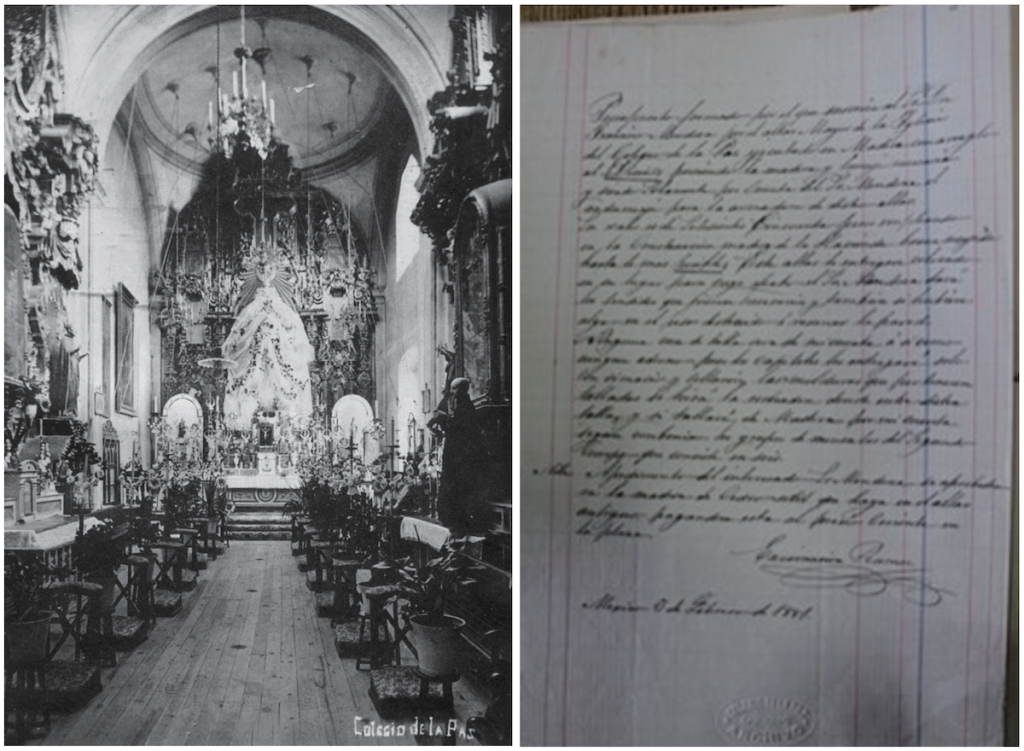
Figure 12. Photograph of the main altarpiece of the School of Vizcaínas, showing the transformed central part and a document describing the Neoclassical design
Music played an essential role in education since the pre-Hispanic period, as children learned to play different instruments. Thus, when the Spaniards arrived, they found fertile soil for this teaching. European tradition also shared this goal. The Historic Archive preserves 575 music manuscripts by European, New Spain, and nineteenth-century composers. As a significant private archive that had not been catalogued, Montréal scholar John G. Lazos approached the manuscripts in 2017–2018, and they are now publicly accessible. Thanks to his effort, some pieces have recently been played.
Among the manuscripts are those written by Ignacio De Jerusalén (1707-1769), an Italian composer and violinist. He travelled from Naples to New Spain in 1742, where he was employed at the Cathedral as the master of chapel and spent the remainder of his life composing and performing religious music (Muriel & Lledías, 2009, p. 47). Two of his daughters, María Joaquina (born after 1742) and María Micaela (1750–1824), were born in New Spain and attended the Colegio de San Miguel de Belém. There, they studied music and acquired the skills necessary to perform their father’s compositions, playing instruments such as the flute and bassoon (Lanam, 2018, p. 160). During that era, men were permitted to sign their work, whereas women were prohibited from doing so. Consequently, no music manuscripts bearing the signatures of the sisters De Jerusalén exist today. Both sisters joined the School of Vizcaínas; María Micaela notably served as vice-rector and later as rector until her passing in 1824. They contributed their knowledge of music and played influential roles as distinguished women.
Vezerro de lecciones solas y con Basso; varios dúos, cánones a tres, a quatro y a cinco vozes, con ligados y semicopiados, Barias partidas en todas claves (Figure 13) ([Document E26-T1-V18], n.d.) is a collaborative work of Italian composers from Naples: Leonardo Leo (1694–1744), Francesco Feo (1691–1761), and Ignacio De Jersualén (Muriel & Lledías, 2009, p. 98). Originally used in the School of Saint Michael of Bethlehem, it became part of the Historic Archive of the School of Vizcaínas after 1862. Its significance lies in its use for music instruction. Multiple generations of girls learned using this book, which is one of the few surviving examples today.
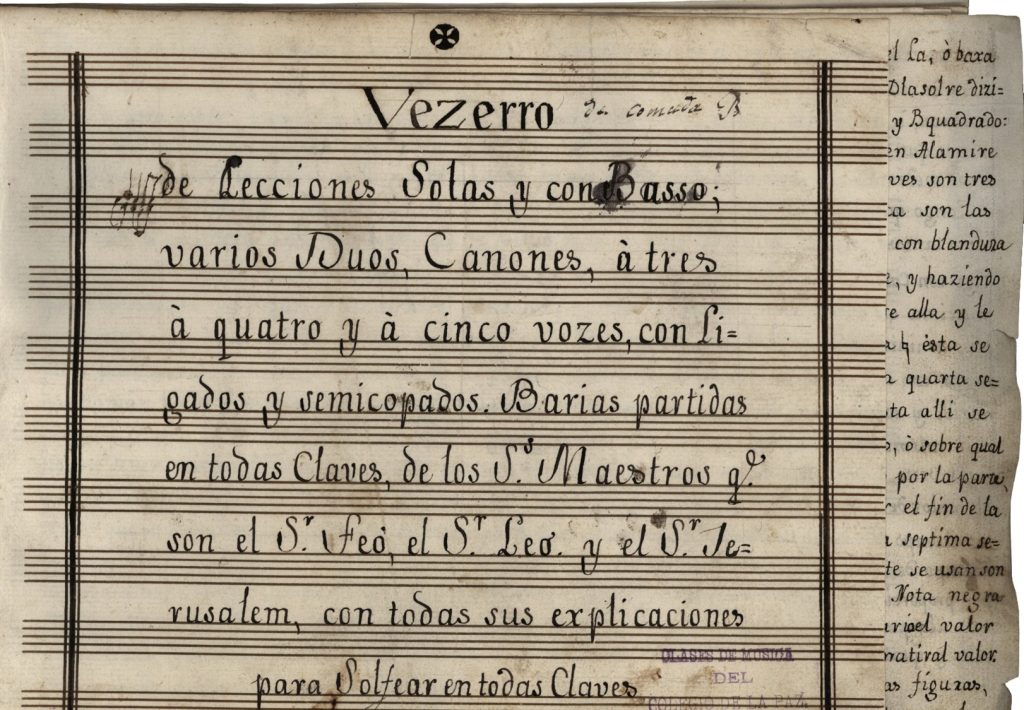
Figure 13. Vecerro, a music manuscript from the eighteenth century
Another Italian composer represented in the archive is Giacomo Facco, whose musical manuscripts made their way to Mexico to be utilized in educating female students. Facco’s work remained unrecognized for many years until 1965, when Italian musician Uberto Zanolli (1917-1994) located his twelve concerti in the Historic Archives of the School of Vizcaínas—specifically, the concerti grossi titled Pensieri Adriarmonici (Lazos, 2017, p. 60).
Following this discovery, the news was publicized, and a concert was organized in Mexico City. At present, students continue to perform his music under the guidance of their professor, who is committed to sharing the valuable resources preserved in the archive.
José Antonio Gómez Olguín (1805–1876) was a prolific composer, credited with 140 music manuscripts (Lazos, 2017, p. 61). Of particular note, the Historic Archive of Vizcaínas holds thirteen of his works. His compositions were largely absent from performances throughout the twentieth century due to a negative assessment by another musician. In the twenty-first century, John G. Lazos discovered several manuscripts, which prompted further successful searches for additional compositions in other archives.
The archive holds the manuscripts, but it is important to note that the school has an organ that was built in 1834 that has remained in the chapel choir since then, used for both religious ceremonies and concerts. This organ is among the few of its kind still operational and in excellent condition after its recent restoration. It was constructed by Francisco Pérez de Lara, who acquired his skills from his father and grandfather during the late eighteenth and early nineteenth centuries. Most of the music in the Historic Archive was performed on this organ. These examples illustrate how students today benefit from using historical sources, as they are encouraged to explore their heritage and develop a deeper appreciation of their school’s patrimony.
Mexico is among the 72 nations participating in the Memory of the World Programme. The country currently holds 115 national inscriptions, 28 Latin American inscriptions, and 14 international inscriptions. Compared with other countries, Mexico demonstrates significant activity in this area. In line with UNESCO’s goal of ensuring that the world’s documentary heritage is universally accessible, the Historic Archive of Vizcaínas meets UNESCO standards and requirements. UNESCO’s Memory of the World Programme, established in 1992, is a strategic initiative to preserve and disseminate knowledge contained within archives, collections, and libraries. The program recognizes the significance of documentary heritage by registering valuable documents (Fernández de Zamora, 2008, p. 3), thereby enhancing global awareness and appreciation of this patrimony. It aims to register institutions to increase their visibility internationally and foster an understanding of their historical contributions with a forward-looking perspective. The responsibility includes ensuring proper preservation of materials and facilitating access for researchers. Upon receiving this recognition, it becomes essential to share the rich history, notable anecdotes, and factual legacy of an institution with a longstanding tradition.
The Historic Archive is organized according to several key criteria: identity, authenticity, and significance—whether at the national, regional, or global level. Additional considerations include rarity, historical period, location, informational integrity, and preservation planning. The concept of documental patrimony encompasses all forms of documentation, including manuscripts, printed materials, audio recordings, films, photographs, graphics, and electronic and digital records (Fernández de Zamora, 2008, p. 3) (Figure 14).
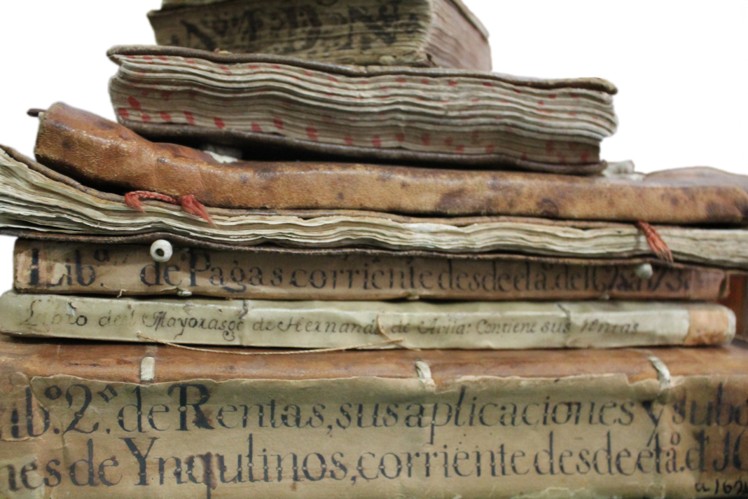
Figure 14. Documents from the Historic Archive
Although the inscriptions vary in subject matter and period, the School of Vizcaínas provides a unique archive focused on the history of education and women’s roles in Mexico during the eighteenth to twentieth centuries; it is one of the few institutions that have witnessed such a long history. Notably, it is accessible to researchers in one location—the same school that has observed many events.
The inscription of the archive in the Memory of the World Programme presents new opportunities for academic research. For the institution, this recognition is a significant honor that deserves to be highlighted. It also entails substantial responsibility for preserving the archive and ensuring its accessibility. With the advancements in digitization—unimaginable to previous generations—the potential for research has expanded considerably, enabling scholars from around the world to consult documents relevant to their fields of interest.
The Memory of the World Programme operates through international committees, drawing on global expertise for guidance. Most registered items are composed of libraries, archives, and film and music collections, all of which require careful preservation. The main goals are to raise awareness of their significance and risks of destruction; annual fumigation and metal shelving help protect these assets.
In terms of a historiographic study, there is only one publication from 2014 that describes the Historic Archive being recognized as “Memory of the World” in Mexico (2008), Latin America and the Caribbean (2010), and internationally (2013), thanks to Dr. Ana Rita Valero’s two decades of leadership. She promoted the importance of registration and sharing the archive with the school community (Valero de García Lascuráin, 2017, p. 120). After UNESCO’s agreement, a new bronze plate was installed at the entrance in May 2025.
Preserving these documents ensures the legacy of the institution founded in the eighteenth century, and it is the only school today that still continues the goals of the Basque founders while adapting to the twenty-first century. Researchers worldwide are invited to engage with and examine this valuable collection. Notably, the collection offers significant opportunities for further study, as it has received limited scholarly attention to date.
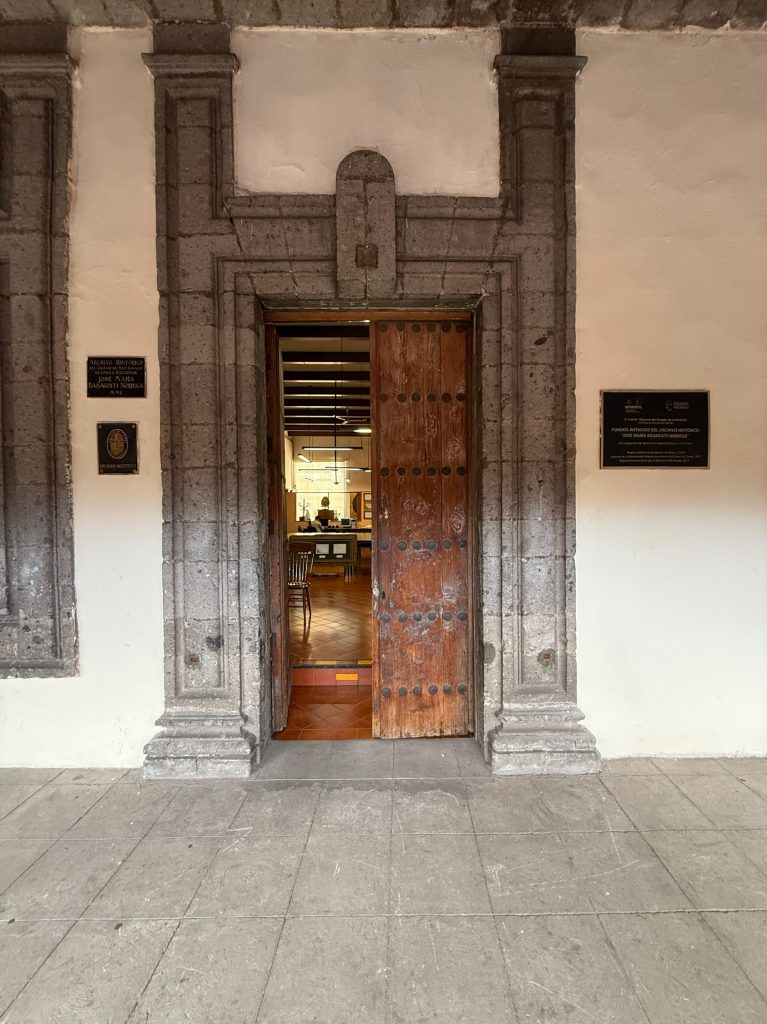
Figure 15. Main entrance of the Historic Archive with bronze plates on each side of the door
This work presents a summarized history of an eighteenth-century school, examining its historical background and significance for understanding girls’ education in Mexico. Sharing aspects of Mexico’s history through the academic study of such educational institutions contributes meaningfully to public knowledge. It offers different approaches to study, as mentioned by Edward P. Thompson´s social approach. Gender Studies are also fundamental for deepening the understanding of women´s roles throughout the years. Although only a select few have been referenced, numerous others remain awaiting review.
Materials such as documents, photographs, and publications preserved from the Viceregal period serve as valuable resources for research purposes. The Historic Archive is available for further study, allowing both Mexican and international scholars to access these records. It is reasonable to inquire whether students currently utilize these resources, and they do; the school’s curriculum actively promotes regular visits to the archive and museum.
Feminine disciplines of sewing and embroidery continue to present significant opportunities for scholarly exploration. The textile collection comprises 1,650 pieces, and attention to its various aspects is anticipated to grow in the near future. Currently, some textiles are displayed on bookshelves within the museum; however, a new initiative aims to establish a professionally curated gallery to enable broader public access to these exemplary embroidery pieces. Although the collection is extensive, the primary focus at present is the systematic study of the archive. Historical records indicate that silk was transported from China to Manila and subsequently across the Pacific Ocean to the port of Acapulco. The inclusion of pearls alongside silver and gold threads underscores both the material worth and symbolic significance of the embroidered piece, which features depictions such as Saint Ignatius of Loyola and the Holy Sacrament. These elements are meticulously rendered in silk on fabric.
UNESCO’s Memory of the World Programme highlights significant preservation efforts by recognizing materials saved from destruction or loss. With strict criteria and an increasing number of annual selections, awarded projects demonstrate both the program’s importance and its impact.
As mentioned before, Julia Mörner dedicated 80 years of her life to the school, and while her story might have faded into obscurity, her memoirs have become an invaluable historical resource. Writing from personal recollections, her accounts include meaningful events such as President Porfirio Díaz’s visit to distribute awards, the installation of electricity in 1903, an earthquake, and the observation of a comet (Mörner, 1945, p. 25). Mörner also documented her efforts to preserve artistic heritage—including paintings, sculptures, silver, and textiles—and described how she and Gonzalo Obregón curated these works in a designated exhibition space. Today, her legacy is recognized through a dedicated exhibition in 2023 and the continued reading of her memoirs during literature classes. These initiatives foster student engagement with the school’s patrimony and instill a sense of pride in being part of Vizcaínas and responsibility for future generations.
Numerous distinguished women have contributed significantly, many of whom remain anonymous. Conducting research on these subjects provides an opportunity to secure their recognition in historical records. However, it is important to acknowledge Teresa Lexarza, who, in 1767 at the school’s founding, became the first woman responsible for safeguarding its documents. Her efforts, along with those of many unknown individuals, were instrumental in preserving this valuable patrimony. Despite lacking contemporary expertise in document preservation, Lexarza recognized the future importance of these records and ensured their protection.
The impact of educated women who shared their knowledge with families and institutions is hard to quantify. During the 1910 Revolution, much of Mexico was illiterate; meanwhile, this city school offered education to a select group of girls.
The School of Saint Ignatius of Loyola Vizcaínas is a unique institution. Beginning in 1970, boys were admitted, following the practice adopted by other institutions. The original walls constructed between 1734 and 1750 remain intact and have withstood numerous historical events. Preservation of both the building and its archival records ensures that valuable resources are available for future generations to conduct research across diverse fields, thereby enhancing understanding of its noteworthy history.
[Acta de junta]. (1942). Archivo Histórico del Colegio de las Vizcaínas, Mexico City, Mexico.
[Document E1-T3-V16]. (1881). Archivo Histórico del Colegio de las Vizcaínas, Mexico City, Mexico.
[Document E4-TV-V12]. (n.d.). Archivo Histórico del Colegio de las Vizcaínas, Mexico City, Mexico.
[Document E5-TV-V7]. (1753). Archivo Histórico del Colegio de las Vizcaínas, Mexico City, Mexico.
[Document E6-T4-C11]. (1878). Archivo Histórico del Colegio de las Vizcaínas, Mexico City, Mexico.
[Document E6-T4-V11]. (1789). Archivo Histórico del Colegio de las Vizcaínas, Mexico City, Mexico.
[Document E26-T1-V18]. (n.d.). Archivo Histórico del Colegio de las Vizcaínas, Mexico City, Mexico.
[Document E28-T5-V1]. (1768). Archivo Histórico del Colegio de las Vizcaínas, Mexico City, Mexico.
[Document E28-Tl-V5]. (1774). Archivo Histórico del Colegio de las Vizcaínas, Mexico City, Mexico.
Fernández de Zamora, R. M. (2008, July–December). México en la Memoria del Mundo. Gaceta Vizcaínas, 12–15.
Lanam, F. S. (2018). El Colegio de San Miguel de Belem: Mexico’s first female music conservatory [Doctoral dissertation, University of California, Santa Cruz]. ProQuest. https://www.proquest.com/openview/659bf06d317aeeaf537c513385acdb29/1?pq-origsite=gscholar&cbl=18750
Lazos, J. (2017). El acervo musical. In Vizcaínas: 250 años de vida en un colegio a prueba del tiempo (pp. 53–65). El Viso.
Mörner, J. (1945). Memorias de una colegiala. Colegio de las Vizcaínas; Editorial Tollocan.
Muriel, J. (1987). Los vascos en México y su Colegio de las Vizcaínas. CITAGAM.
Muriel, J., & Lledías, L. (2009). La música en las instituciones femeninas novohispanas. Universidad Nacional Autónoma de México; Universidad del Claustro de Sor Juana.
Obregón, G. (1942). Informe [Unpublished report]. Archivo Histórico del Colegio de las Vizcaínas (E25-T3-V1), Mexico City, Mexico.
Obregón, G. (1949). El Real Colegio de San Ignacio de México (Las Vizcaínas). El Colegio de México; Fondo de Cultura Económica. https://www.cervantesvirtual.com/obra/el-real-colegio-de-san-ignacio-de-mexico-las-vizcainas/
Olavarría y Ferrari, E. (1889). El Real Colegio de San Ignacio de Loyola vulgarmente Colegio de las Vizcaínas, en la actualidad Colegio de la Paz: Reseña histórica. Imprenta Francisco Díaz de León. https://bvpb.mcu.es/es/catalogo_imagenes/grupo.do?path=149975
Romandía de Cantú, G. (1987). Los bordados. In Los vascos en México y su Colegio de las Vizcaínas. CITAGAM.
Sánchez Cortina, E. (2017). La colección artística y lo que nos cuenta del colegio. In Vizcaínas: 250 años de vida en un colegio a prueba del tiempo (pp. 105–117). El Viso.
Valero de García Lascuráin, A. R. (2014). El tesoro de Vizcaínas: Sus documentos antiguos, Memoria del Mundo. Colegio de Vizcaínas; ADABI de México.
Valero de García Lascuráin, A. R. (2017). El Archivo Histórico José María Basagoiti Noriega. In Vizcaínas: 250 años de vida en un colegio a prueba del tiempo (pp. 119–127). El Viso.
Vargas Lugo, E. (1987). Los tesoros artísticos. In Los vascos en México y su Colegio de las Vizcaínas (pp. 177–223). CITAGAM.